

Are Freshly Roasted Coffee Delivery Services Worth It?
Last Updated: October 30, 2026
Quick Summary
Freshly roasted coffee delivery services are worth it when the roaster stamps a real roast date and ships fast enough that you finish the bag inside its peak-freshness window. Judge value by delivered cost per ounce, not shelf price, and match bag size to your pace so the last cup is not stale.
- Check the roast date stamp against the delivery date on your first bag to test a service's freshness promise.
- Our 12 oz bags run $22.99 to $24.99, which works out to about $30.65 to $33.32 per pound.
- Choose a bag size that empties in roughly two to three weeks to keep every cup inside the freshness window.
- Buy whole bean and grind just before brewing, since grinding exposes far more surface area to oxygen.
- Confirm renewal cadence, skip and pause options, and the cancellation process before your first order.
Table of Contents
- What Freshly Roasted Coffee Delivery Reviews Should Tell You
- How Coffee Delivery Freshness Holds Up After Opening
- Best Coffee Subscription Services for Roast-to-Order Beans
- Coffee Subscription Cost Comparison: Price Per Pound and Value
- How to Choose a Coffee Subscription That Fits Your Routine
- Shipping Speed, Packaging, and Subscription Terms Compared
- Where Freshly Roasted Coffee Delivery Reviews Get It Wrong
- Ordering Your First Bag of Freshly Roasted Coffee
- Frequently Asked Questions
What Freshly Roasted Coffee Delivery Reviews Should Tell You
Most coffee review roundups tell you a bag tasted good, the least useful thing they could say.
A bag ground and sealed months before it ships will taste flat no matter how good the beans were.
Below, we break down what to check before you subscribe, how our roasts hold up after opening, and what each bag costs per pound.
How Coffee Delivery Freshness Holds Up After Opening
Freshness after opening comes down to three things: whole bean versus ground, how much air the bag holds, and how fast you drink it. Whole bean keeps its aroma far longer than pre-ground, because grinding exposes far more surface to oxygen. A one-way valve bag helps, but once you open it, the clock starts.
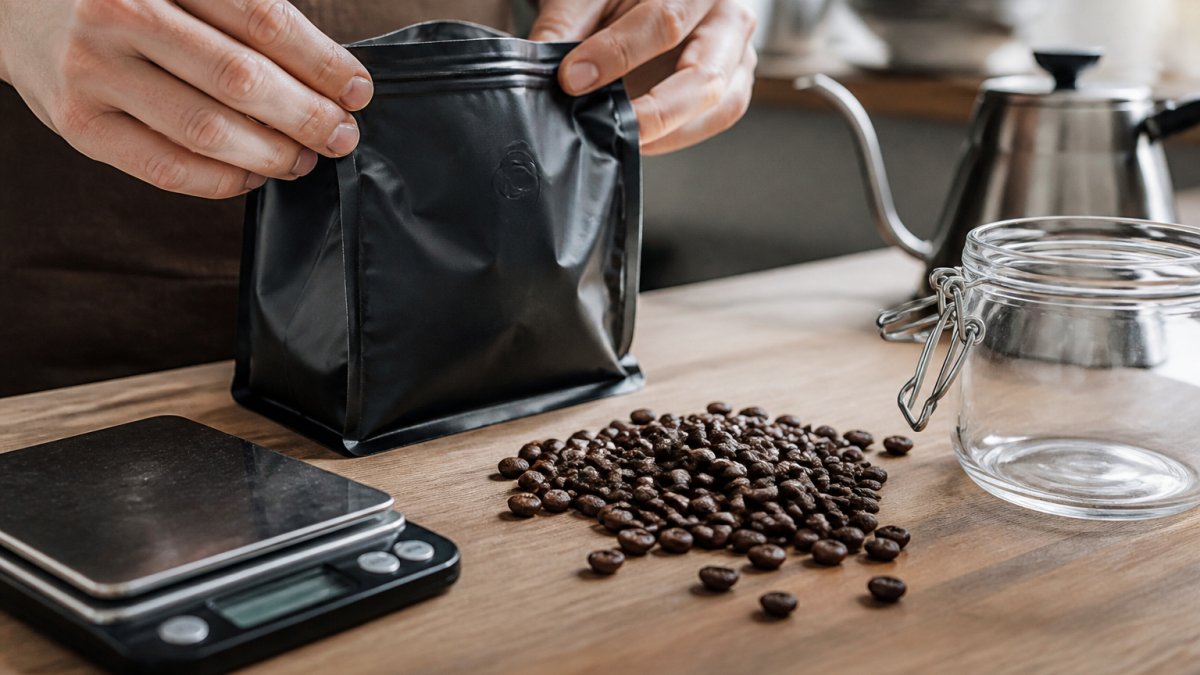
A practical rule: buy whole bean, grind just before brewing, and store the bag sealed at room temperature, away from light and heat.
Watch out: buying a five-pound bag when you drink half a bag a week means the last cup is weeks older than the first. Match bag size to your pace, not to the per-pound discount.
Best Coffee Subscription Services for Roast-to-Order Beans
The best coffee subscription service for you is the one whose roast schedule, bag sizes, and grind options match how you actually brew. The lineup is built around that idea: order what you need, choose your grind, and have it roasted to order rather than pulled off a shelf.
Here is how our five core coffees compare.
| Coffee | Roast | Tasting Notes | Price | Best For |
|---|---|---|---|---|
| Medium Blend House | Medium | Balanced, medium body and acidity | $24.99 | Everyday drinking |
| Breakfast Blend | Light | Walnuts, mild apple, raisin, toffee | $22.99 | Bright morning cups |
| House Blend | Medium | Nutty, sweet chocolate, mild citrus | $22.99 | Smooth, consistent daily brew |
| Peru Single Origin | Medium | Salted caramel, silky sweet, citrus | $22.99 | Exploring origin character |
| Half Caf Medium Roast | Medium | Smooth, half-caffeinated | $24.99 | Cutting back on caffeine |
Medium Blend House Coffee: The Everyday All-Rounder
If you want one bag that works for drip, pour-over, and espresso, start here. Medium Blend is a well-balanced house blend with medium body and acidity, roasted to order and available in whole bean, coarse, standard, or espresso grind.
Best for: households that brew a pot most mornings and want a dependable, smooth cup. Skip if: you prefer a light, tea-like brightness, in which case the Breakfast Blend is the better fit.
View the Medium Blend House Coffee

Breakfast Blend and House Blend: Lighter, Brighter Cups
Two blends cover the lighter end of the range. Breakfast Blend is a lightly roasted mix of South American coffees with notes of walnuts, mild apple, slight raisin, and toffee, washed and sun dried. House Blend is a medium roast from Central and South America, smooth and clean, with nutty, sweet chocolate, and mild citrus notes and a bright finish.
Best for: drinkers who want clarity and aroma over heavy body. Skip if: you take your coffee with plenty of milk, where a bolder cup carries better.
Explore the Breakfast Blend or shop the House Blend.

Peru Single Origin and Half Caf: Niche Picks That Deliver
Single origin drinkers get one standout: our Peru coffee, from the Cooperativa Agricola de Servicisios Norandino in Piura at 1,100 to 1,700 metres, with a medium roast and notes of salted caramel, silky sweet, and citrus.
Best for: curious drinkers and anyone managing caffeine intake. Skip if: you want a dark, smoky roast, which this lineup does not include.
Check out the Peru single origin or view the Half Caf Medium Roast.

Coffee Subscription Cost Comparison: Price Per Pound and Value
Price per pound is the only fair way to compare coffee subscription cost across bag sizes, but price per pound alone is not the whole story. The number that actually matters is delivered cost per ounce: bag price plus shipping, divided by the ounces in the bag. That is the figure you can line up against a supermarket bag, a local roaster, or another subscription.
The per-pound math on our lineup
Our 12 oz bags run $22.99 to $24.99. Twelve ounces is 0.75 lb, so the 12 oz price per pound works out as follows:
| Coffee | 12 oz Price | 12 oz Price Per Pound |
|---|---|---|
| Medium Blend House | $24.99 | About $33.32/lb |
| Breakfast Blend | $22.99 | About $30.65/lb |
| House Blend | $22.99 | About $30.65/lb |
| Peru Single Origin | $22.99 | About $30.65/lb |
| Half Caf Medium Roast | $24.99 | About $33.32/lb |
Those per-pound figures fall as bag size rises, because the price scales with volume rather than staying flat. The exact per-pound rate at 1 lb, 2 lb, 5 lb, and 12 lb depends on current size pricing, so check the product page and run the same division: price divided by pounds.
Why the supermarket bag can look cheaper and cost more
A supermarket bag may carry a lower shelf price, but the coffee may have been roasted weeks or months earlier, and the freshness clock may already have run.
A common pattern among heavy coffee drinkers: they buy the largest bag to chase the per-pound discount, then drink stale coffee for the final third of it.
Total cost and value: the worksheet
Before you compare two services, fill in these five numbers for each:
- Bag price for the size you will actually finish.
- Shipping charge for that bag to your ZIP code.
- Delivered cost per ounce, (bag price + shipping) ÷ ounces.
- Peak-freshness window, how many days after the roast date the bag stays at its best, and whether your pace fits inside it.
- Subscription discount or free-shipping threshold, if any, and what you must spend to reach it.
Bag size versus your pace
A rough guide to sizing, assuming a typical 1:16 brew ratio and a mug or two a day:
- 12 oz, a trial bag, or a single light drinker for two to three weeks.
- 1 lb, a regular solo drinker or a light two-person household.
- 2 lb, a two-person home that brews most mornings.
The goal is a bag that empties in roughly two to three weeks. That keeps every cup inside the freshness window and makes the per-pound comparison honest.
Specialty Coffee Association publishes guidance on coffee freshness and storage
How to Choose a Coffee Subscription That Fits Your Routine
Choosing well means answering four questions before you order: how much do you drink each week, how do you brew, do you want variety or consistency, and how often do you want deliveries. Get those right and the subscription runs itself.
Use this checklist:
- Estimate weekly consumption, then pick a bag size that empties in two to three weeks
- Match grind to your brewer: espresso grind for espresso machines, coarse for French press, standard for drip
- Decide between a blend for consistency and a single origin for exploration
A common mistake is ordering the largest bag to save money, then drinking stale coffee for a month. Buy to your pace first.
Shipping Speed, Packaging, and Subscription Terms Compared
Shipping speed and packaging decide whether "freshly roasted" survives the trip. Most review roundups mention "fast shipping" and stop there. What you actually need to verify is the time from roast to dispatch, the time from dispatch to your door, what shipping adds to the bill, where delivery is covered, and what the subscription terms say about renewal, skipping, pausing, and cancellation.
Here is the framework we use, and the questions to ask any roaster before you commit.
The roast-to-door timeline
Freshly roasted coffee moves through four checkpoints. Ask a roaster to state each one plainly:
- Roast day, the date stamped on the bag, not a "best by" date.
- Rest and dispatch, how long the beans sit after roasting before they ship. A short rest (often a day or so) lets CO2 off-gas so bags do not balloon; too long a rest erodes the freshness advantage.
- Transit, the carrier and service level, plus the typical number of business days to your region.
- Delivery, whether the carrier leaves the bag at the door, requires a signature, or holds it for pickup.
A roaster that publishes a roast date and a dispatch window is giving you something you can check. A roaster that only says "fresh" is asking you to take it on faith.
Packaging and freshness preservation
Whole-bean coffee stales fastest when it meets oxygen, light, heat, and moisture. The packaging features that matter:
- One-way degassing valve, lets CO2 escape without letting oxygen in. Standard on good specialty bags; ask if it is not stated.
- Opaque or foil-lined material, blocks light that accelerates staling.
- Resealable closure, a zip or tin tie so the bag can be closed after opening.
Grind choice interacts with all of this. Whole bean holds aroma far longer than pre-ground, because grinding exposes far more surface area to oxygen. If you do not own a grinder, order the smallest bag that matches your weekly pace and expect a shorter peak window.
Shipping cost and delivery coverage
Shipping is where a cheap-looking bag stops being cheap. Before you subscribe, confirm:
- Flat rate or calculated? A flat rate is predictable; calculated shipping can swing with weight and distance.
- Free-shipping threshold? Many roasters waive shipping above a bag-size or order-value threshold. Know the number.
- Geographic coverage, domestic only, or international? If international, who handles duties and customs?
A simple test: add the bag price and the shipping charge, then divide by the number of ounces in the bag. That is your true delivered cost per ounce, and it is the number to compare across services.
Subscription terms: renewal, skip, pause, cancel
The terms are where reviews go quiet, and where buyers get surprised. Confirm these before your first order:
- Renewal cadence, weekly, biweekly, monthly, or on-demand? Does it auto-renew, and can you change the interval?
- Skip and pause, can you skip a single delivery or pause without cancelling? Is it self-service or does it require an email?
- Cancellation, is it one click in your account, or a phone call? A service that buries cancellation is a warning sign.
How Taylor Brothers Coffee handles it
At Taylor Brothers Coffee, every batch is roasted to order rather than pulled from a warehouse shelf. Grind options (whole bean, coarse, standard, espresso) and bag sizes from 12 oz to 12 lb let you order exactly what you will use. Confirm current shipping rates, delivery coverage, and subscription terms at checkout before your first order, and use the roast-date-to-delivery-date check above on your first bag.
USPS and major carriers publish typical ground transit maps by ZIP code
Where Freshly Roasted Coffee Delivery Reviews Get It Wrong
Most reviews fail on methodology. They taste once, skip the roast date, ignore shipping cost, and never revisit the coffee after opening. That tells you almost nothing about what will arrive at your door.
A fair review should:
- State the roast date and the delivery window
- Note the bag size and grind, since both change freshness
- Report the total cost including shipping
Freshly roasted coffee is a perishable product with a real clock on it. Any review that ignores that clock is guesswork dressed up as guidance.
Ordering Your First Bag of Freshly Roasted Coffee
Start small and specific.
At Taylor Brothers Coffee, every batch is roasted to order from carefully sourced beans, with grind options and bag sizes from 12 oz to 12 lb. You get maximum flavor and aroma because the coffee ships fresh, not from a warehouse shelf.
Get started with Taylor Brothers Coffee and taste the difference a roast date makes in your first cup.
Frequently Asked Questions
How can you tell if coffee beans are freshly roasted?
Check the roast date on the bag, not a best-before date. Freshly roasted coffee is typically at its best between 5 and 30 days after roasting, so a printed roast date tells you exactly where a bag sits in that window. Beans should look evenly colored with a matte, not oily, surface on lighter and medium roasts. A strong aroma when you open the bag is another signal. If a listing only shows a best-before date months out, you cannot verify roast-to-order freshness.
How soon after roasting should coffee be delivered?
Ask any roaster for its roast-to-dispatch and transit times before you order, then compare those figures against the roast date on your bag. Ask how orders are fulfilled before subscribing. A roaster that roasts to order rather than pulling from warehouse stock shortens the gap between roast and doorstep.
Are coffee subscriptions worth the cost?
They are worth it if you drink coffee regularly and value freshness over convenience-store pricing. A 12 oz bag at $22.99 to $24.99 works out to roughly $30 to $33 per pound, higher than supermarket coffee but in line with specialty roasters. The value comes from roast-to-order fulfillment, grind options matched to your brewer, and delivery that removes the weekly errand. If you drink less than a bag a month, a one-time purchase beats a recurring plan.
Can you pause or cancel a coffee subscription?
That depends entirely on the service, so confirm the terms before you commit. Look for clear language on pausing shipments, skipping a delivery, changing frequency, and cancelling. A subscription you cannot pause easily becomes a liability if you fall behind on drinking. Ask directly how cancellation works and whether you can manage it from your account. Getting that answer in writing before the first order prevents the billing surprises people complain about in reviews.
Which coffee delivery services let you choose roast level and grind?
The ones built around roast-to-order fulfillment usually let you pick both. Grind options commonly include whole bean, coarse, standard drip, and espresso, which matters because pre-ground coffee stales faster than whole bean. Roast level choice is worth comparing across services, since medium roasts suit many everyday brewing methods. If a service only offers one grind or a fixed roast, you lose the ability to match the coffee to your brewing method.
