

Top 5 Medium Roast Coffees for Iced Coffee
Table of Contents
- Why Medium Roast Coffees Win for Iced Coffee
- How We Tested: Ranking the Best Coffee Beans for Iced Coffee
- 1. House Blend: The Everyday Smooth Operator
- 2. Peru: Silky Caramel for Flash-Chilled Coffee
- 3. Guatemala: Bright Fruit and Butterscotch
- 4. Colombia: Berry and Chocolate for Cold Brew
- 5. Brazil Santos: The Cocoa-Forward Value Pick
- The Best Coffee Roast for Iced Coffee: A Quick Comparison
- Frequently Asked Questions
Last Updated: October 18, 2026
Why Medium Roast Coffees Win for Iced Coffee
Medium roast coffees hold their flavor when ice and dilution hit the glass. That is the short answer, and it is the reason this guide from Taylor Brothers Coffee focuses on medium roasts rather than light or dark ones. A light roast can taste thin and sharp once it chills, while a dark roast often turns ashy and bitter over ice.
Cold mutes our perception of aroma and sweetness. That is basic sensory science, and it explains why the same beans that taste vivid hot can fall flat at 4°C. A medium roast keeps more of its caramelized sugars and balanced acidity, so the cup still reads as coffee rather than cold brown water.
Below, we rank five medium roast coffees we recommend for iced coffee, explain exactly how we evaluated them, and show you how to brew each one at home. Every pick comes from our own freshly roasted lineup, priced at $22.99 per bag (Medium Blend at $24.99), so you can compare like for like.
How We Tested: Ranking the Best Coffee Beans for Iced Coffee
We ranked these coffees on four criteria: how the flavor holds up after ice dilution, performance in both flash-chilled iced coffee and cold brew, balance with milk or sweetener, and value per bag. Every coffee was brewed to the same parameters so the comparison stays fair and repeatable at home.
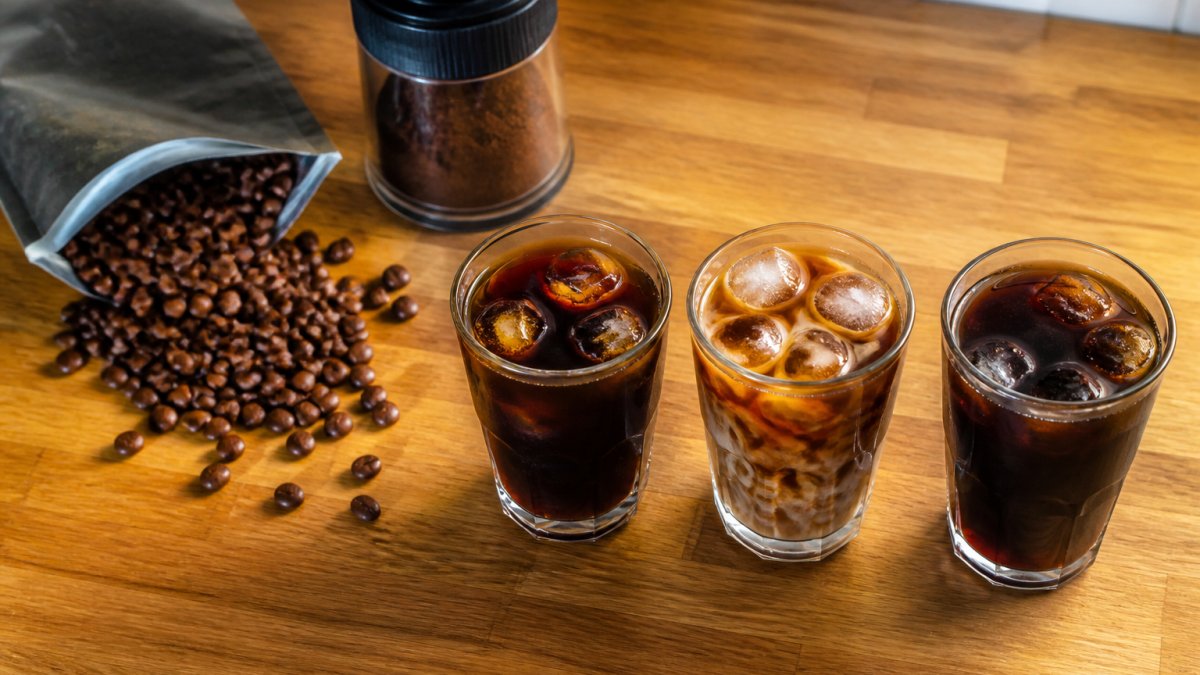
Here is the exact method we used, and you can repeat it at home:
- Flash-chilled iced coffee: dose 20 g of medium-ground coffee (about the texture of table salt) to 300 g of water at 96°C, brew as a pour-over or drip, then pour directly over 150 g of ice to chill fast. Final dilution lands near 1:15 overall.
- Cold brew: dose 100 g of coarse-ground coffee (sea-salt texture) to 500 g of cold filtered water at a 1:5 concentrate ratio, steep 16 hours at room temperature or 18 hours refrigerated, then dilute 1:1 with water or milk before serving.
- Tasting criteria: aroma, sweetness, acidity, body, and how the flavor reads after dilution, each scored on a simple 1-5 scale so differences show up rather than blur together.
- Serving checks: each coffee tasted black, then with 30 ml of whole milk, then with 5 g of simple syrup, so we could see which profiles survive dairy and sweetener.
- Value check: cost per brewed serving calculated from bag size and dose, not just sticker price.
A common mistake is judging beans only as hot coffee. Iced coffee changes the flavor profile, so we scored every coffee cold and after dilution. If you want the deeper technical background, the Specialty Coffee Association's brewing standards set the water temperature and ratio benchmarks we followed.
1. House Blend: The Everyday Smooth Operator
Our top pick overall is House Blend, a medium roast blend of Central and South American coffees built for consistency. It is smooth, clean, and forgiving, which makes it the safest choice if you are new to making iced coffee at home. At $22.99 a bag, it is also our benchmark for value.

The tasting notes tell the story: nutty, sweet chocolate, mild citrus, and a clean bright finish. Over ice, the chocolate and nutty notes stay forward while the citrus keeps the cup from tasting flat. It performed well in both brew methods, and it held its shape with a splash of milk.
What we like most is the repeatability. House Blend is a blend by design, so batch-to-batch variation stays low. If you drink iced coffee daily, that consistency matters more than any single flavor note.
- Best for: daily iced coffee, milk drinks, beginners
- Brew method: flash-chilled or cold brew
- Price: $22.99 per bag
2. Peru: Silky Caramel for Flash-Chilled Coffee
Peru is our pick for flash-chilled iced coffee, where its silky body and salted caramel sweetness shine. This single origin comes from the Norandino cooperative in Piura, grown at 1,100-1,700 metres and washed and sun-dried. The tasting profile is salted caramel, silky sweet, and citrus.

Flash-chilling locks in aromatics that a long cold steep can mute. Peru rewards that speed: the caramel note stays rich, and the citrus lifts the finish. In cold brew it is softer and sweeter, still good, but the flash-chilled version is the one we would serve a guest.
The one drawback is subtlety. If you load your iced coffee with flavored syrup, Peru's finer notes get buried. Drink it black or with a little milk to get your money's worth.
3. Guatemala: Bright Fruit and Butterscotch
Guatemala brings dark chocolate, bright fruit, and butterscotch, and it is the most interesting cup in this lineup. The beans come from smallholder farmers in Antigua, grown on volcanic loam at 1,200-1,616 metres. That terroir shows up as a lively, layered flavor profile.

Over ice, the bright fruit keeps the cup refreshing rather than heavy, while butterscotch adds a rounded sweetness. It is the pick for anyone who finds standard iced coffee boring. Paired with a splash of oat milk, the butterscotch turns almost creamy.
Where it falls short: the fruit-forward acidity can read sharp if you over-extract it. Keep your cold brew steep to 16 hours and dilute properly, and it stays balanced. Push past 20 hours and the brightness tips into sourness.
4. Colombia: Berry and Chocolate for Cold Brew
Colombia is the best medium roast coffee for cold brew in our lineup. Its dried orange, berry, and chocolate notes deepen during a long cold steep, producing a concentrate with real body and a clean finish. The beans come from smallholder farmers around Medellín, fully washed and dried in solar dryers.
Cold-water brewing pulls less acidity than hot water, so Colombia's berry note reads as sweetness rather than tartness. Diluted at roughly 1:1 with water or milk, it makes a smooth, low-acidity iced coffee that works for people who find hot-brewed coffee harsh on the stomach.
The tradeoff is patience. Cold brew takes 16 hours, so this is a plan-ahead coffee, not a spontaneous one. Make a batch on Sunday and you have iced coffee all week.
5. Brazil Santos: The Cocoa-Forward Value Pick
Brazil Santos closes the list as the value pick: elegant, smooth, and cocoa-forward at $22.99 a bag. The beans come from estates in Paraná and São Paulo, pulped natural and sun-dried, which gives the cup its rounded, nutty sweetness.
This is the coffee for people who take their iced coffee with milk and a little sugar. The cocoa notes blend into milk without disappearing, and the smooth body means no bitter edge when the ice melts. It is also the most forgiving of grind mistakes, which makes it a good starter bean.
What most guides miss is that Brazilian naturals like this one age gracefully for iced use. The cocoa-forward profile stays stable for weeks after the roast date, so a bag lasts without a flavor cliff.
The Best Coffee Roast for Iced Coffee: A Quick Comparison
Medium roast is the best coffee roast for iced coffee because it balances body and sweetness against the dilution of ice. The table below summarizes our five picks so you can match a coffee to your brew method and taste, with the side-by-side results from both flash-chilled and cold-brew testing.
| Coffee | Tasting Notes | Flash-Chilled Result | Cold-Brew Result | Milk/Sweetener | Cost per Serving | Best For |
|---|---|---|---|---|---|---|
| House Blend | Nutty, sweet chocolate, mild citrus | Balanced, chocolate forward, clean finish | Smooth, slightly sweeter, mild citrus fades | Holds up well with milk; light syrup fine | ~$1.15 | Everyday iced coffee |
| Peru | Salted caramel, silky sweet, citrus | Rich caramel, bright citrus lift | Softer, sweeter, caramel dominates | Best black or with a splash of milk; syrup buries nuance | ~$1.15 | Dessert-leaning cups |
| Guatemala | Dark chocolate, bright fruit, butterscotch | Lively fruit, rounded butterscotch | Fruit reads sweeter, butterscotch creamy with oat milk | Oat milk turns butterscotch creamy; avoid heavy syrup | ~$1.15 | Adventurous drinkers |
| Colombia | Dried orange, berry, chocolate | Berry reads tart, chocolate thin | Berry deepens to sweetness, full body, clean finish | Dilutes well 1:1 with milk; low-acidity | ~$1.15 | Low-acidity cold brew |
| Brazil Santos | Cocoa, smooth, elegant | Cocoa forward, smooth, no bitter edge | Rounded, nutty, stable over a week | Blends into milk without disappearing; sugar-friendly | ~$1.15 | Milk and sweetener |
Two practical notes before you buy. First, buy whole bean and grind coarse for cold brew; pre-ground coffee loses aroma fast. Second, check the roast date. Freshly roasted beans rest for a few days, then hit their best window for iced coffee. If you want a neutral primer on roast levels, Healthline's guide to coffee roast types explains the differences clearly, and the USDA's coffee market data covers origin and trade context.
Frequently Asked Questions
What type of coffee makes the best iced coffee?
Medium roast coffees work best for iced coffee because they keep enough sweetness and body to survive ice dilution without turning bitter or hollow. Light roasts can taste thin once chilled, and dark roasts often turn ashy over ice. A medium roast with a balanced flavor profile, like a smooth blend or a washed single origin, gives you sweetness, low bitterness, and enough structure to hold up in both cold brew and flash-chilled iced coffee.
Should you use medium or dark roast for cold brew?
Medium roast is the safer choice for cold brew. Cold-water brewing pulls less bitterness than hot water, so a dark roast can taste flat or overly roasty after 12 to 18 hours of steeping. Medium roast coffees keep their sweetness, chocolate notes, and mild acidity, which read as balanced once you dilute the concentrate. If you like a heavier cup, a medium-dark roast is the furthest you should push before the cold brew starts tasting like burnt sugar.
How do you keep iced coffee from tasting watered down?
Brew a concentrate instead of a ready-to-drink cup. Use a brew ratio of roughly 1:8 coffee to water for cold brew, then dilute with milk or water when serving. For flash-chilled coffee, brew at double strength and pour directly over a generous amount of ice so the melt is built into the recipe. Bigger ice cubes melt slower. Also grind coarse: a coarse grind slows extraction and stops the bitter, thin flavors that make iced coffee taste weak.
What grind size is best for iced coffee?
Coarse grind, similar to sea salt, is best for cold brew because a long steep needs slower extraction. For flash-chilled iced coffee made with a pour-over or drip brewer, go medium-coarse so the hot water passes through in about three to four minutes. Whole bean coffee ground just before brewing keeps the aroma and sweetness intact. If you buy pre-ground, ask for coarse grind and use it within a week or two of the roast date.
Are medium-roast beans good for iced coffee?
Yes. Medium roast coffees sit in the sweet spot for iced coffee: they carry caramel, cocoa, and citrus tasting notes without the char of a dark roast or the sharp acidity of a light roast. They also hold up after ice dilution and with milk or sweeteners. Freshness matters more than the exact origin, so check the roast date and buy whole bean when you can. A medium roast roasted within the last two weeks will outperform a stale bag every time.
Iced coffee rewards the right bean more than any gadget. Medium roasts give you the body to survive ice, the sweetness to stay pleasant cold, and the balance to work with milk or black. Taylor Brothers Coffee roasts every bag to order, so your beans arrive fresh and ready for both flash-chilled and cold-brew methods. Browse the full medium roast lineup, pick a bag size that matches your weekly habit, and start with House Blend if you want the safest first pour.