

How to Tell if Coffee Is Stale: 8 Signs to Check
Last Updated: October 28, 2026
Quick Summary
To know how to tell if coffee is stale, check for a dull, flat aroma, a papery or cardboard taste, dry cracked beans, and a weak bloom when hot water hits the grounds. Two or more of these signs together mean the coffee is stale. Any mold, musty odor, or pests mean you should discard it.
- Whole bean coffee stays fresh about two to four weeks after the roast date when stored well.
- Ground coffee tastes noticeably flat within one to two weeks of opening.
- Fresh coffee blooms and forms a thick foamy layer when hot water is added.
- Dark roasts and decaf can bloom less even when fresh, so judge them with other checks.
- Store beans in an airtight container at room temperature, away from heat and light.
Table of Contents
- Why Stale Coffee Happens and What It Means
- 8 Signs of Stale Coffee to Look For
- A Simple Freshness Test You Can Do at Home
- How Long Do Coffee Beans Stay Fresh?
- Does Ground Coffee Go Bad?
- Stale Coffee vs Spoiled Coffee: Safety and Mold Risks
- How to Store Coffee Beans for Maximum Freshness
- Order Freshly Roasted Coffee from Taylor Brothers
- Frequently Asked Questions
Why Stale Coffee Happens and What It Means
Stale coffee has lost its aroma, flavor, and character through oxidation, moisture, heat, or light.
Here at Taylor Brothers Coffee, we roast every batch to order.
Three forces drive staleness:
- Oxygen reacts with coffee oils and turns them dull and bitter
- Moisture speeds up that reaction and can invite mold
- Heat and light break down the compounds that create aroma
Whole beans protect themselves better than ground coffee because the oils stay locked inside; grinding exposes far more surface area to air. That single decision changes your freshness window more than almost anything else.
8 Signs of Stale Coffee to Look For
The clearest signs of stale coffee show up in what you smell, taste, and see. Run through this checklist before you brew another cup.
Smell and Aroma Changes
Fresh coffee hits you before you even open the bag. Stale coffee barely registers.
- Dull, flat aroma where there should be a bright, distinct scent
- A dusty or papery smell instead of fruit, chocolate, or nuts
- A faint rancid note when the oils have turned
If you have to bury your nose in the bag to catch anything, that is your first warning. According to guidance from the Specialty Coffee Association on freshness, aroma is the most reliable early signal of quality decline.
Taste and Flavor Changes
Your palate confirms what your nose suspected. Stale coffee tastes flat and hollow, with the bright notes gone.
Watch for these flavor shifts:
- Flat, dull flavor with no distinct character
- Bitterness that lingers, even in a medium roast
- A cardboard or papery finish
Here is what most people get wrong: bitterness does not always mean staleness. Over-extraction from the wrong grind or water temperature causes it too, we cover that distinction below.
Visual Clues in Beans and Grounds
Your eyes can catch what your nose misses. Look closely at the beans or grounds.
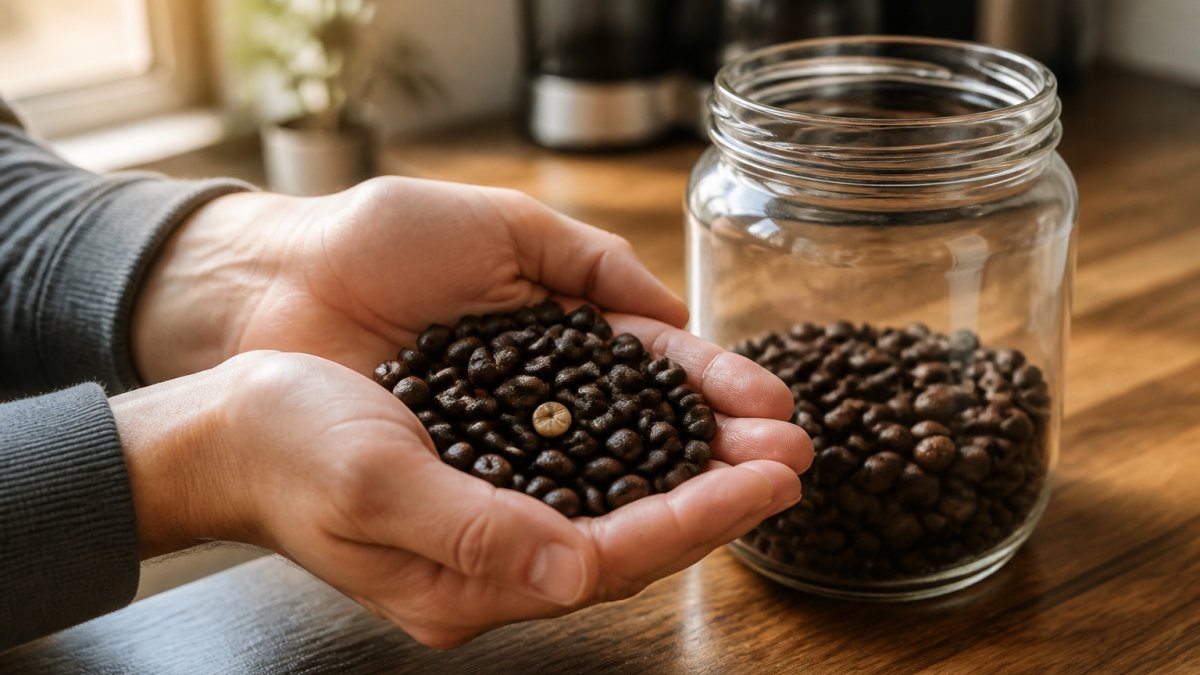
- Dry, cracked beans with no sheen at all
- Pale, faded color compared to the deep tone of fresh beans
- Wet clumps in ground coffee, a sign of moisture getting in
A little oil on darker roasts is normal and not a sign of staleness. Judge the overall look, not one shiny bean.
A Simple Freshness Test You Can Do at Home
Most guides give you one trick, the bloom test, and stop there, but a single sign can mislead you, especially with dark roasts, decaf, or coffee ground days ago. This short, repeatable sequence checks smell, appearance, grind behavior, and the brewed cup in about five minutes. Run the steps in order and interpret each result before moving on.
Step 1: The Smell Check
Open the bag or container and smell the coffee at room temperature, not straight from the grinder.
- Bright, distinct aroma with recognizable notes (fruit, chocolate, nuts, caramel), likely fresh.
- Faint or dusty smell that you have to hunt for, early staleness.
- Papery, cardboard, or faintly rancid note, the oils have turned; expect a flat cup.
Aroma usually fades before flavor, so a weak smell is an early warning rather than a final verdict. If the smell is borderline, continue to the next steps.
Step 2: The Appearance Check
Look at the beans or grounds in good light.
- Whole beans: fresh beans usually have a slight sheen from surface oils, especially on medium-dark and dark roasts. Dry, cracked, or uniformly pale beans suggest age. A single shiny bean is not a sign of freshness, judge the overall batch.
- Ground coffee: look for clumps that stay damp or stick together. That points to moisture exposure, which speeds staleness and can invite mold. Dry, free-flowing grounds are a better sign.
- Any visible fuzz, white or green patches, or insects, discard immediately.
Step 3: The Bloom Test
This is the step most people know, but interpretation matters more than the trick.
- Put one level tablespoon of grounds in a clear glass or cup.
- Pour about 4 ounces of hot water just off the boil (around 200°F / 93°C) over the grounds.
- Watch for 30 to 60 seconds.
Fresh coffee swells, bubbles, and forms a thick foamy layer, carbon dioxide is still trapped in the beans and escaping. Stale coffee stays flat, the grounds sink, and little or no foam forms.
Two caveats keep this test honest:
- Dark roasts and decaf can bloom less even when fresh because of how they are processed. Judge them alongside the smell and taste checks rather than on bloom alone.
- Pre-ground coffee loses gas quickly after grinding, so a weak bloom may reflect time since grinding rather than time since roasting.
Step 4: The Brewed-Cup Check
Brew a small cup your usual way and taste it black before adding milk or sugar.
- Bright, layered flavor with a clean finish, fresh.
- Flat, hollow, or papery taste with a thin body, stale.
- Lingering bitterness or a sour note that tastes wrong, could be staleness, but could also be a brewing fault. If the aroma was still bright, suspect grind, water temperature, or brew time before blaming the beans.
How to Read the Results Together
No single check is definitive. Use this rule:
- Two or more checks point to staleness (faint smell, dull appearance, weak bloom, flat cup), treat the coffee as stale and plan to finish it soon or repurpose it.
- Only the bloom test fails but smell and taste are fine, the coffee is likely still usable; bloom is the least reliable single signal.
- Any sign of mold, musty odor, damp clumps, or pests, discard regardless of the other results.
If your coffee passes these checks, brew it properly to get the best cup. Our guide on how to brew fresh coffee correctly walks through grind size, water temperature, and timing step by step.
How Long Do Coffee Beans Stay Fresh?
Whole bean coffee stays fresh for about two to four weeks after the roast date when stored well. After that, quality drops steadily, though it remains safe to drink.
The freshness window depends on a few things:
- Roast level: darker roasts tend to fade faster than lighter ones
- Storage: an airtight container in a cool, dark spot extends life
- Packaging: a one-way valve bag slows oxidation but does not stop it
A printed roast date beats a best-by date, but it is not a guarantee on its own. Our article on whether a roast date really means fresher coffee explains why the date alone can mislead you.
Here is how long coffee stays fresh depending on how it is stored and handled.
| Item | Freshness window | Note |
|---|---|---|
| Whole bean coffee | About two to four weeks after roast date | Quality drops steadily after, still safe to drink |
| Ground coffee | Noticeably flat within one to two weeks of opening | Grinding exposes oils to oxygen |
| Darker roasts | Fade faster than lighter roasts | Roast level affects the window |
| Airtight container, cool dark spot | Extends life | Storage matters |
| One-way valve bag | Slows oxidation but does not stop it | Packaging helps |
| Whole beans vs pre-ground | Whole beans last far longer | Grinding shortens freshness |
Does Ground Coffee Go Bad?
Yes, ground coffee goes bad, and it happens faster than with whole beans. Expect ground coffee to taste noticeably flat within one to two weeks of opening.
The reason is surface area: grinding exposes the oils to oxygen all at once, so oxidation runs much quicker.
Signs your ground coffee has turned:
- No bloom when you add hot water
- A dusty, lifeless smell
- Flat, papery taste in the cup
Buy ground coffee in smaller amounts you will finish quickly, or switch to whole beans and grind just before brewing.
Stale Coffee vs Spoiled Coffee: Safety and Mold Risks
Stale coffee and spoiled coffee are not the same thing, and the difference matters for flavor and health. Stale coffee has lost aroma and character through oxidation, a quality problem. Spoiled coffee has been contaminated by moisture, mold, or pests, a safety problem. Most of the time your coffee is stale, not spoiled, but knowing where the line sits helps you decide what to drink and what to toss.
What Staleness Actually Is
Staleness is a chemical drift, not a contamination event. Oxygen reacts with the oils on the bean surface, heat and light break down aromatic compounds, and moisture accelerates both, producing dull aroma, flat flavor, and a papery finish. None of that makes the coffee unsafe, old coffee that smells faint and tastes hollow can still be brewed and drunk.
When Staleness Turns Into Spoilage
Spoilage requires an added factor, usually moisture. Coffee is hygroscopic, pulling moisture from the air, so a damp bag, a steamy kitchen, or a container opened with wet hands can push moisture high enough for mold to grow.
Watch for these red flags, which mean discard rather than salvage:
- Visible mold on beans or grounds, often white, green, or fuzzy patches
- A musty or moldy smell that persists after the bag is open for a few minutes
- Wet clumps that stay damp and stick together in the container
If you spot any of these, do not brew it. Mold can produce compounds you do not want in your cup, and the USDA food safety guidance on mold is clear that moldy food should be discarded rather than salvaged.
Stale Coffee vs a Brewing Problem
A third category often gets confused with staleness: a brewing fault.
A quick way to separate the two: smell the grounds before brewing. Bright aroma plus a bad cup points to brewing. Faint aroma plus a bad cup points to staleness. If you are unsure, brew a small cup with a method you trust, such as a simple pour-over with water just off the boil, before deciding the beans are past their prime.
What Staleness Does Not Mean
Stale coffee is not automatically unsafe or undrinkable. Many people happily drink coffee a few weeks past its peak, especially with milk or sugar. The rule is simple: if it smells and tastes merely flat, it is a quality issue you can work around; if it smells or looks spoiled, it is a safety issue you should not ignore.
How to Store Coffee Beans for Maximum Freshness
Storing coffee beans well is the single best way to slow staleness. Keep them away from air, moisture, heat, and light, and they will hold their flavor far longer.
Follow these storage rules:
- Use an airtight container with a tight seal
- Store at room temperature, not in the fridge or freezer for daily use
- Keep it dark, in a cupboard away from the stove
A common mistake is keeping beans in the fridge. For a deeper walkthrough, see our complete guide on how to keep coffee fresh after delivery, and this detailed guide on how to keep coffee beans fresh at home covers long-term storage.
Order Freshly Roasted Coffee from Taylor Brothers
The best defense against stale coffee is buying from a roaster who ships fresh. Taylor Brothers Coffee roasts every batch to order, so beans arrive close to their peak instead of sitting in a warehouse.
Our Medium Blend House Coffee is a balanced everyday pick, with medium body and acidity. Choose whole bean or a grind that fits your brewer, in sizes from 12 oz up to bulk bags.

Frequently Asked Questions
How can you tell if coffee is stale?
Stale coffee shows up in three main ways. Smell: fresh coffee has a strong, distinct aroma, while stale beans smell dull, dusty, or like cardboard. Taste: a flat, bitter, or papery flavor replaces the sweetness and acidity you expect. Appearance: beans look dry and pale with no oily sheen, and grounds may clump. A quick test is to smell the beans right after grinding. If the aroma is weak, the coffee is past its prime.
Does ground coffee go bad faster than whole beans?
Yes, ground coffee goes bad faster than whole beans. Grinding exposes far more surface area to oxygen, moisture, and light, so the oils oxidize quickly. Whole beans stay fresh for weeks after opening, while ground coffee is best used within a week or two. Buy whole beans and grind just before brewing when you can, or choose a grind size that matches your brewer and store it airtight.
Can you still drink coffee made from stale beans?
You can drink coffee made from stale beans, but the flavor will be flat and dull. Stale coffee is not automatically unsafe. The real safety concern is spoilage: visible mold, a rancid smell, wet clumps, or insects mean you should throw the coffee out. If the beans are simply old but dry and free of mold, they are safe to brew, though the cup will lack aroma and complexity.
How should you store coffee beans to keep them fresh?
Store coffee beans in an airtight container away from light, heat, and moisture. Keep the container in a cool cupboard, not the fridge or freezer, because temperature swings and condensation speed up staleness. Buy only as much as you will drink in a few weeks. If you order whole beans from Taylor Brothers Coffee, transfer them to an airtight jar after opening and grind just before brewing for the best flavor.
Stale coffee is easy to spot once you know the signs: a dull smell, a flat taste, and no bloom in the cup. The fix is simpler still, which is coffee roasted fresh and shipped straight to you. Taylor Brothers Coffee roasts to order, sources beans from trusted farms, and delivers with fast, reliable fulfillment so every bag arrives ready to brew. Get started with Taylor Brothers Coffee and taste what fresh coffee is supposed to be.
